Top 5 Menu Design and Production Mistakes Restaurant Owners Often Overlook
2026. 1. 29.
Figma

Hyunyoung Kim
Founder of Sphere D, a design and strategy studio analyzing global tech trends and product positioning.
To help you create menus that customers can quickly understand, we have outlined five common mistakes restaurant owners frequently miss.
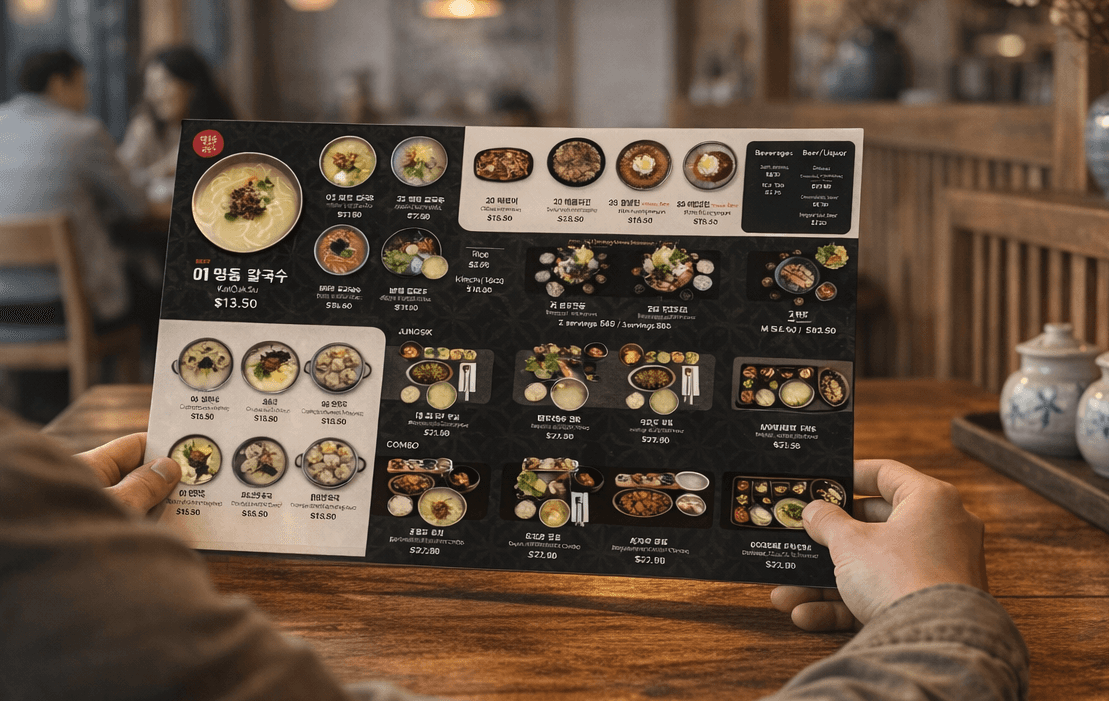
When people talk about restaurant menus, the conversation often starts with design.
Is the typography clean, do the photos look good, does the paper feel premium.
In reality, however, the menu mistakes that impact sales most often come from a very different place.
In many cases, these are not things owners intentionally overlook. They are details that become invisible simply because they feel familiar.
Below are five menu design and production mistakes we see most frequently in real restaurant settings.
Assuming knowledge that is obvious to the owner but unfamiliar to the customer
When reviewing menus, we often find information that feels obvious to the owner presented without explanation.
Ingredients, preparation methods, or flavor profiles are listed as if they are already understood.
From the customer’s perspective, that knowledge is not shared.
If there is no clear cue about what a dish tastes like, how it feels, or what it is comparable to, even a well crafted menu item can feel unclear at first glance.
In these moments, customers tend to fall back on what they already know.
Instead of trying something new, they choose familiar or safe options.
We frequently see noticeable shifts in ordering behavior after adding just a small amount of context to menu descriptions.
There is no need to explain cooking techniques in detail. Helping guests imagine the experience of the dish is often enough.
A menu is not a place to list professional knowledge.
It is closer to a guide that helps customers choose without hesitation.
This distinction is surprisingly easy to miss.
Not considering the context in which the menu is read
Menus are rarely read in calm, focused environments.
Customers are usually hungry, seated with others, and waiting to order.
Yet many menus are difficult to scan.
Text is small, information is dense, or the visual flow makes it unclear where to start reading.
When this happens, customers stop reading altogether.
They default to familiar items instead of exploring the menu.
Even if there is a dish the owner wants to highlight, it will not be chosen if it is not easily readable.
Menus are not about looking good for a long time.
They need to be understood quickly. This is a point that is often overlooked.
A menu structure that does not match the actual ordering flow
The role of a menu changes depending on how a restaurant operates.
Is ordering done at the counter or at the table.
Does staff guide the customer or is the choice made independently.
Despite this, many restaurants use a single menu format without considering how orders actually happen.
For example, in fast paced environments where speed matters, menus designed like fine dining menus can slow the entire process.
Too much information can reduce efficiency rather than improve clarity.
Before design, a menu needs to align with how the restaurant runs day to day.
This operational fit is more often missed than expected.
Designing for screens without considering print results
Most menus are reviewed on screen before they are printed.
They look fine digitally, but once printed, colors appear darker or text feels heavier and harder to read.
In most cases, this is not a design flaw.
It is the result of not considering print conditions from the beginning.
Paper texture, lighting, and viewing distance inside the restaurant all affect how a menu is perceived.
Without these factors in mind, the design remains optimized only for screens.
This is another detail frequently missed during production.
Treating the menu as a one time deliverable
Once a menu is printed, it often feels like something that should last for years.
As a result, menus are rarely seen as assets that need regular review or adjustment.
Over time, however, menus easily drift away from the reality of the restaurant.
Signature dishes change. Customer preferences shift. The atmosphere evolves.
When the menu does not reflect these changes, it stops representing the restaurant accurately.
Menus may not stand out at first glance, but they directly influence customer choices, ordering flow, and overall sales more than many owners expect.
It may be worth asking whether your current menu
is easy for customers to understand
guides them toward the dishes you intend to highlight
and supports the way your restaurant actually operates.
At Sphere D, we approach menus as more than visual design outputs.
We connect menu structure with operations, customer flow, and both online and offline experiences.
If you are curious about what type of menu best fits your restaurant today, you are welcome to take a look.
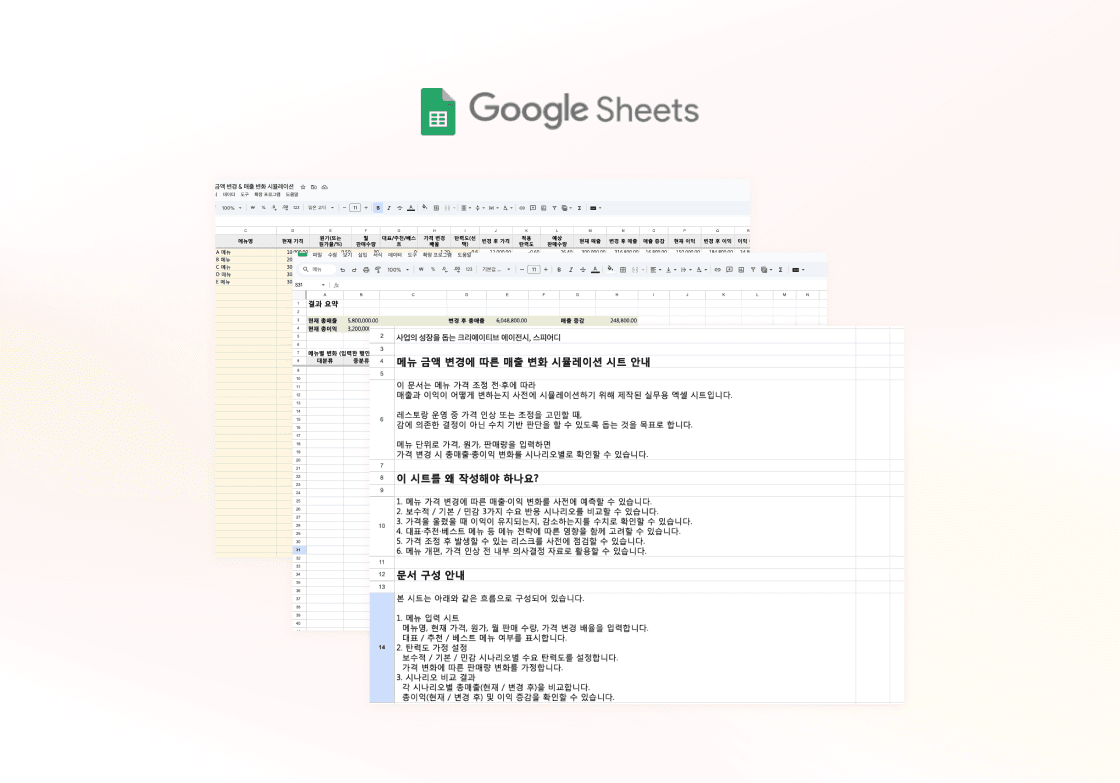
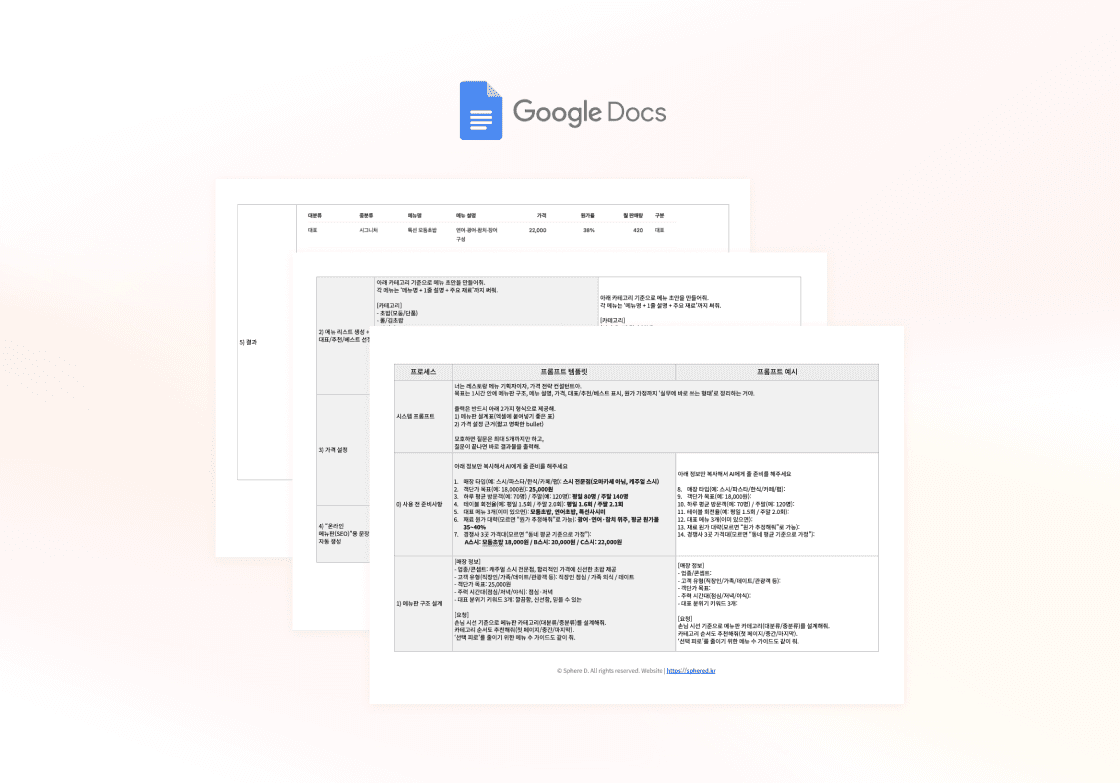
More details about our menu design service can be found below.
Sphere D.
Contact.
contact@sphered.kr
+82 70-8098-0775
Location.
Seoul, Korea
Toronto, Canada
Services.
Works.
Copyright © 2025 Sphere D. All rights reserved.
Sphere D | CEO: Hyunyoung Kim | Business Registration No.: 330-33-01418
E-commerce Registration No.: 2025-Seoul Seocho-0075
Address: 11F, 17, Seocho-daero 77-gil, Seocho-gu, Seoul, Republic of Korea