[CES 2026] Zoox - When Fully Autonomous Robotaxis Become a Real Service
2026. 1. 13.
CES 2026

Hyunyoung Kim
Founder of Sphere D, a design and strategy studio analyzing global tech trends and product positioning.
This article is part of Sphere D’s CES 2026 Insight Series, where we analyze what is often overlooked: structure, positioning, and why products succeed or fail in the real market.
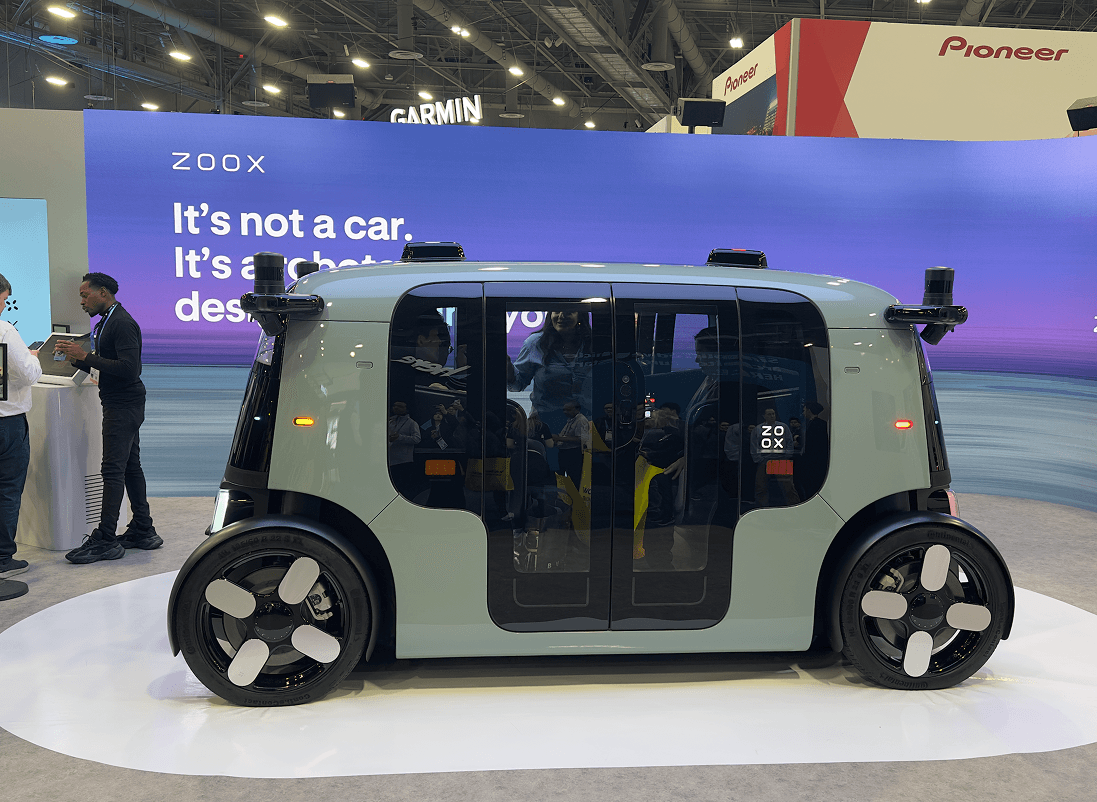
One of the most striking scenes during CES 2026 didn’t come from a keynote stage or a concept video—it happened on the streets of Las Vegas. A vehicle with no steering wheel, no pedals, and no human driver moved smoothly through the city, carrying everyday passengers to their destinations as if nothing about it were unusual. What Zoox demonstrated felt less like a technology demo and more like a snapshot of an already-operating service.
Zoox, the autonomous mobility company acquired by Amazon, drew significant attention at CES by offering real-world rides in its fully autonomous robotaxi. Unlike many competitors, Zoox did not retrofit an existing car. Its vehicle was designed from the ground up solely for autonomous operation. There is no driver’s seat. Instead, four passengers face each other in a carriage-style layout inside a perfectly symmetrical vehicle capable of driving forward or backward at the same speed.
Removing the Driver Changes the Entire Experience
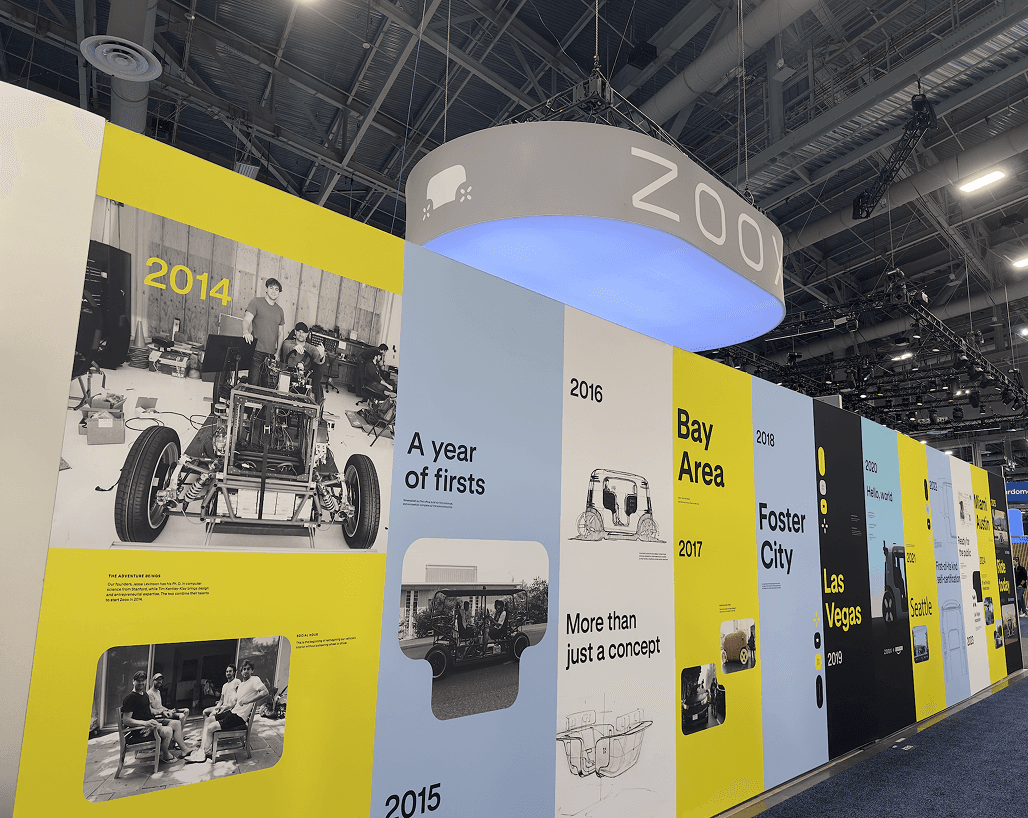
Stepping inside a Zoox vehicle, the first thing passengers notice is the absence of tension typically associated with driving. With four-wheel steering, the vehicle navigates narrow urban streets smoothly, and concepts like U-turns or directional orientation begin to feel irrelevant. Motion is fluid and predictable.
Each passenger has individual climate controls and music preferences, and the interior feels closer to a compact lounge than a traditional car. The vehicle is designed to operate for up to 16 hours on a single charge—an indication that Zoox is building for continuous service, not occasional demonstrations. Most notably, the system operates at Level 4 autonomy in real urban environments, with no human intervention during driving.
During CES ride-alongs, a Zoox employee was present, but only to provide safety explanations and onboarding guidance. They did not control the vehicle. That distinction clearly signals how far Zoox’s technology has progressed.
Building a Platform, Not Just a Vehicle
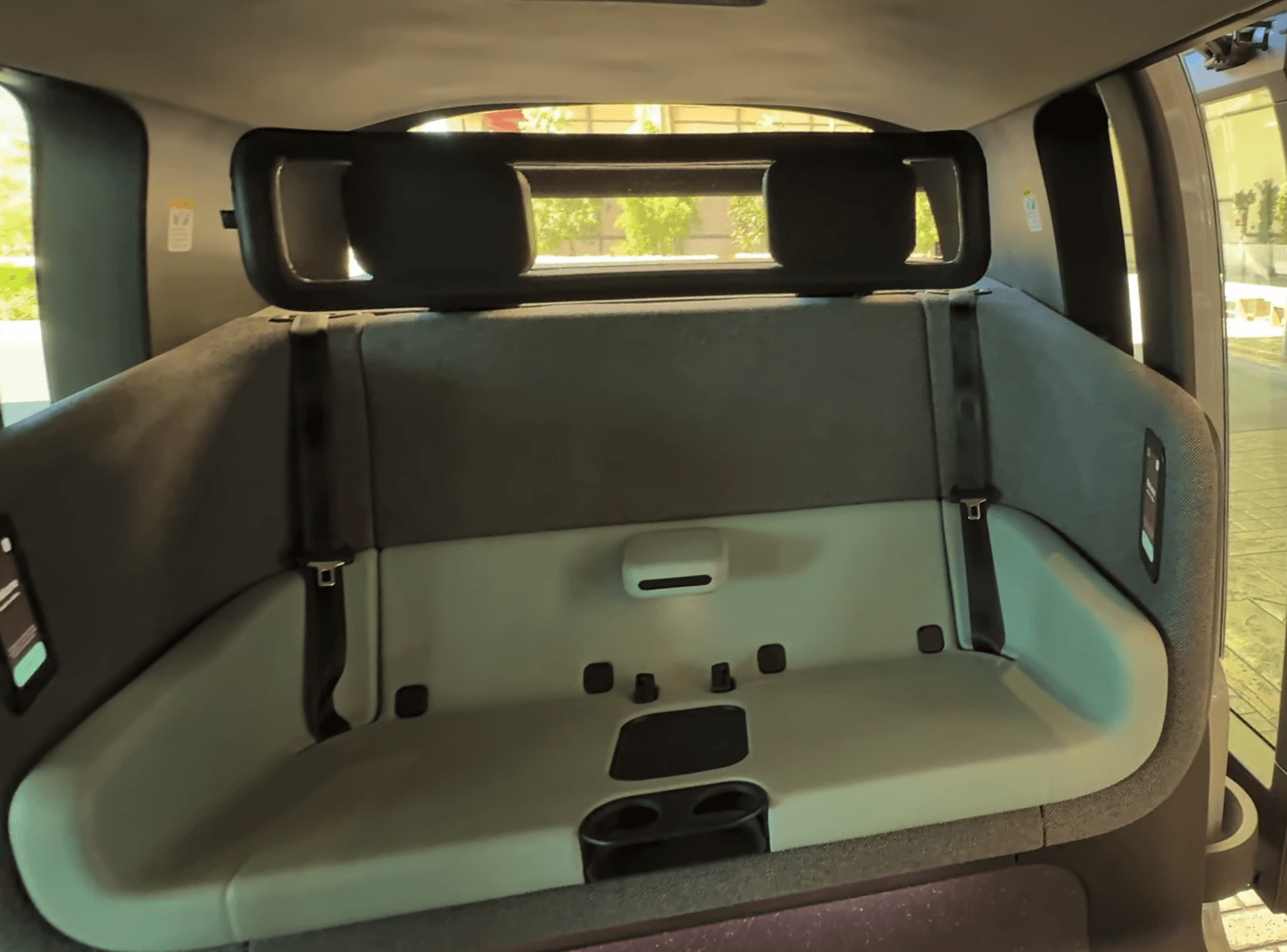
Founded in 2014 and acquired by Amazon in 2020, Zoox’s direction became increasingly clear after the acquisition. Backed by Amazon’s capital and technical infrastructure, the company accelerated development and began autonomous testing in San Francisco as early as 2017.
By late 2023, Zoox launched limited public trials in parts of San Francisco and Las Vegas. In 2025, it introduced the “Zoox Explorers” program, allowing selected users to experience the service for free while the company gathered real-world operational data. Service areas have gradually expanded across neighborhoods such as SOMA, the Mission District, and the Design District, with Austin and Miami next on the roadmap.
What truly differentiates Zoox is its commitment to purpose-built design. Unlike Waymo or Cruise, which adapt existing vehicles, Zoox starts with the assumption that no human will ever drive. The symmetrical chassis, optimized sensor placement, five-point seatbelts, airbags at every seat, and a full 360-degree sensor array are all aligned around one principle: fully autonomous operation at scale.
Still a Pilot, but with Clear Direction
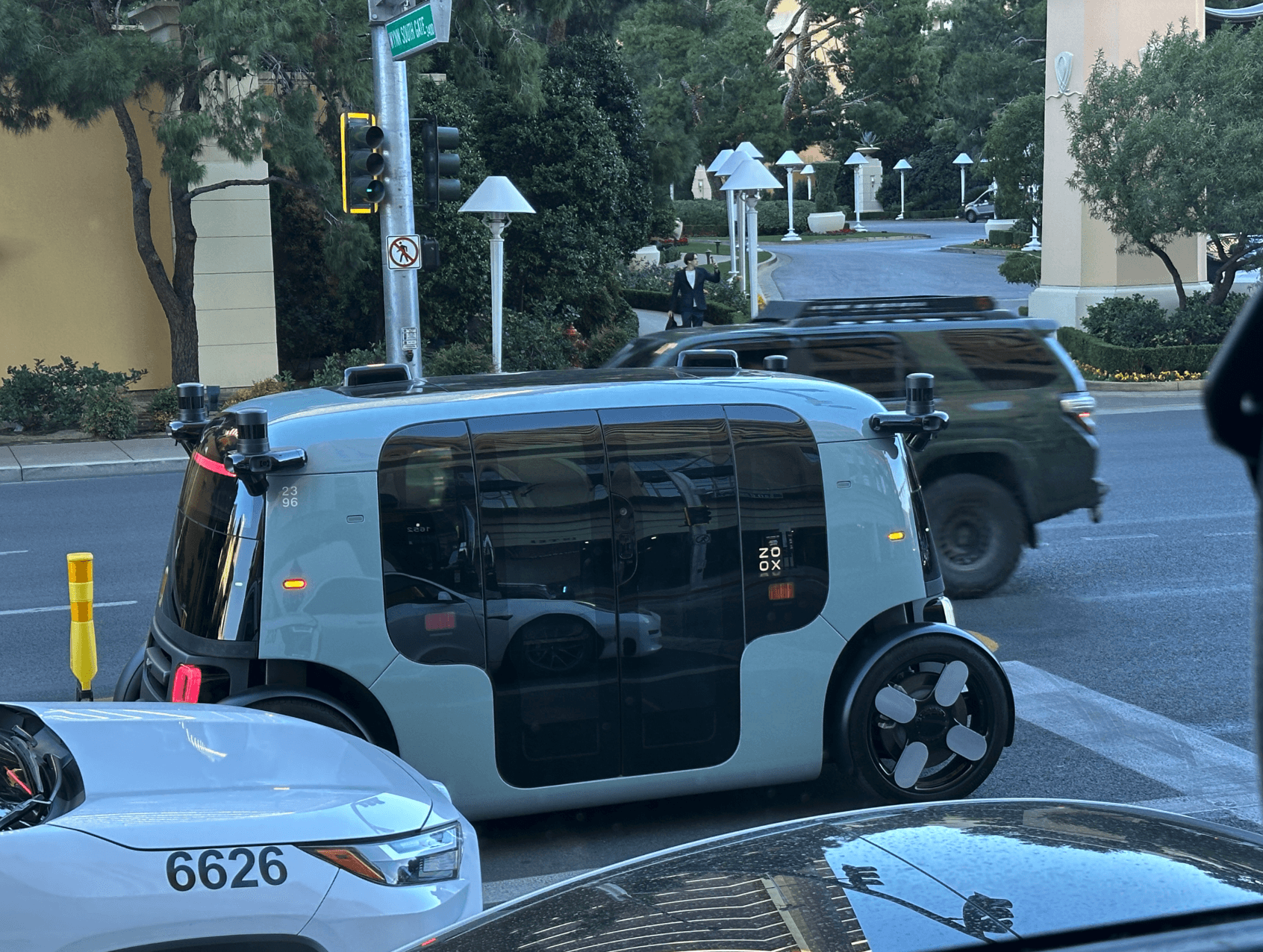
Zoox robotaxis currently operate under regulatory approval in limited zones in Nevada and California. The CES demonstrations in downtown Las Vegas made one thing clear: autonomous driving is no longer confined to labs or closed test tracks.
Passenger feedback has been notably consistent—rides are smooth, stable, and surprisingly reassuring. On LinkedIn and other social platforms, many described the experience as “a glimpse of the future, already here.”
Challenges remain. Regulatory approval, safety validation, and city-by-city compliance will take time. Rather than pushing for rapid expansion, Zoox is taking a measured approach—working closely with local governments and communities, starting with constrained routes such as casino shuttle services and gradually broadening its operational footprint. Passenger feedback continues to inform iterative improvements in vehicle behavior.
Why This Matters Beyond Ride-Hailing
Industry observers are increasingly focused on Zoox’s longer-term potential. With Amazon as its parent company, the possibility of extending the same autonomous platform from passenger transport to logistics and last-mile delivery is difficult to ignore. Once the system is proven with people, adapting it for goods becomes a logical next step.
Alongside Waymo and Cruise, Zoox has secured a place in the race toward autonomous mobility at scale. But its differentiation is not about building better cars. It’s about redefining what “mobility” means when driving is removed from the equation.
Why We’re Sharing This with Our Clients
Zoox is not trying to showcase the flashiest technology. Instead, it is rigorously answering a single question: What should mobility look like once humans no longer need to drive?
Rather than incrementally improving existing models, Zoox chose to reset the assumptions entirely—eliminating the steering wheel, redesigning the vehicle form factor, and prioritizing service operations from the start. This mindset extends far beyond mobility.
When we work with clients on products, services, and platforms, we often face a similar crossroads:
Should we optimize what already exists, or reconsider the problem from the ground up?
At CES 2026, Zoox offered one of the clearest real-world examples of what the second choice can achieve—quietly, convincingly, and at scale.
Sphere D.
Contact.
contact@sphered.kr
+82 70-8098-0775
Location.
Seoul, Korea
Toronto, Canada
Services.
Works.
Copyright © 2025 Sphere D. All rights reserved.
Sphere D | CEO: Hyunyoung Kim | Business Registration No.: 330-33-01418
E-commerce Registration No.: 2025-Seoul Seocho-0075
Address: 11F, 17, Seocho-daero 77-gil, Seocho-gu, Seoul, Republic of Korea