[2026 CES] Rokid - Building AR by Solving Real Problems First
2026. 1. 12.
CES 2026

Hyunyoung Kim
Founder of Sphere D, a design and strategy studio analyzing global tech trends and product positioning.
This article is part of Sphere D’s CES 2026 Insight Series, where we analyze what is often overlooked: structure, positioning, and why products succeed or fail in the real market.
Rokid
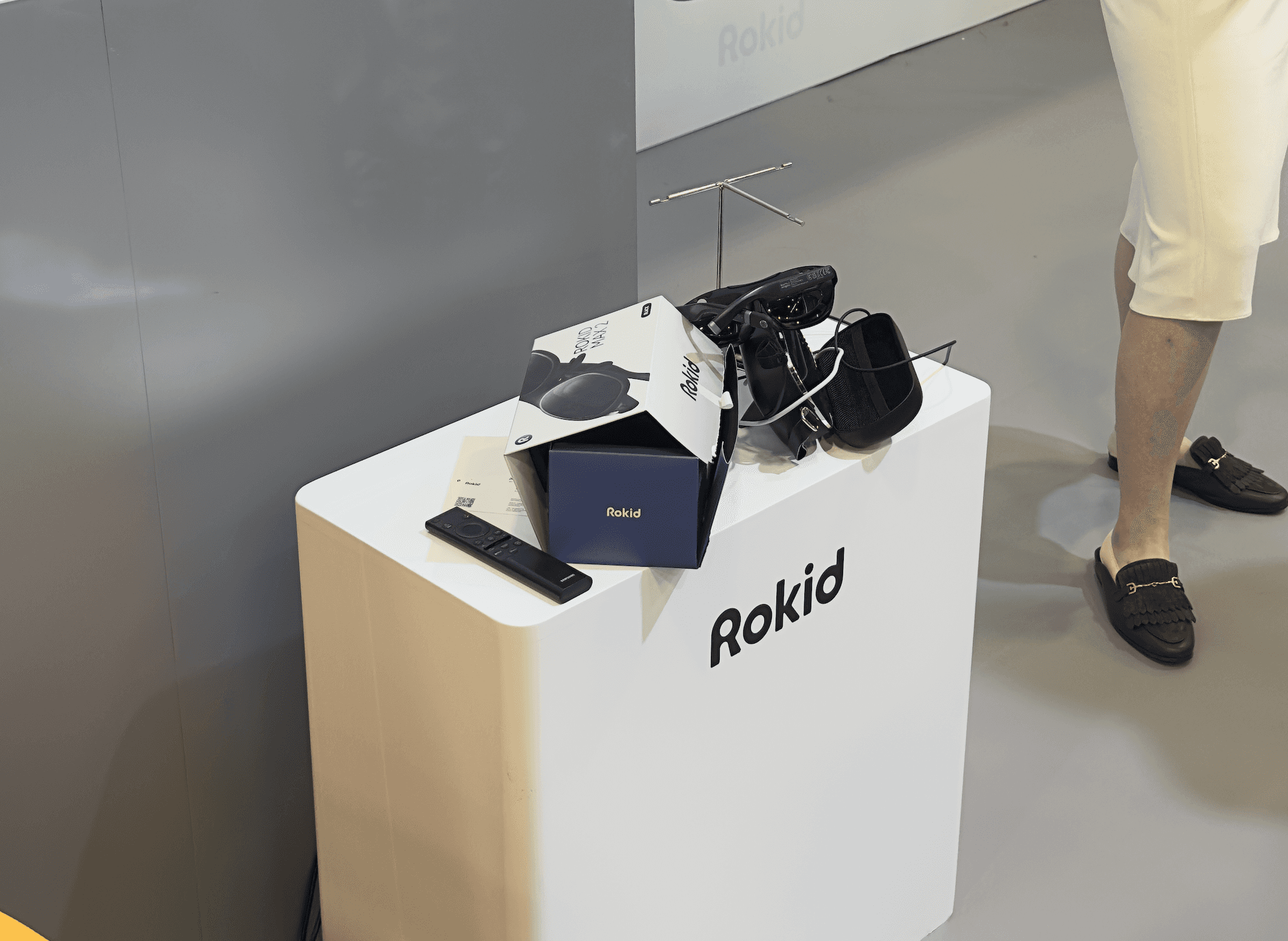
Rokid did not enter the consumer AR market overnight. Since its founding in 2014, the company has taken a consistent approach: validating technology first in environments where its purpose is clear and its reliability is non-negotiable.
The journey began with smart speakers, but Rokid soon pivoted toward industrial AR. Its flagship industrial headset, X-Craft, was designed for high-risk environments such as oil and gas facilities, featuring explosion-proof construction and 5G/GPS-based remote collaboration. These were not experimental features. They were requirements for environments where technology must work every time, without exception.
During the COVID-19 pandemic, Rokid applied the same mindset to a different problem. The company developed smart glasses capable of measuring the body temperature of up to 200 people within two minutes, completely contact-free. Once again, this was not technology designed to impress, but technology designed for situations where the absence of a solution would create real friction and risk.
Across these phases, one pattern is clear. Rokid has consistently prioritized technology that is used, not technology that is showcased.
This track record of practical deployment built the credibility that enabled Rokid to scale. In 2022, the company raised $160 million in Series C funding from investors including Temasek, bringing total funding to approximately $378 million. Rokid’s move into consumer AR was not a departure from its past, but a continuation of the same philosophy.
What Crowdfunding Revealed
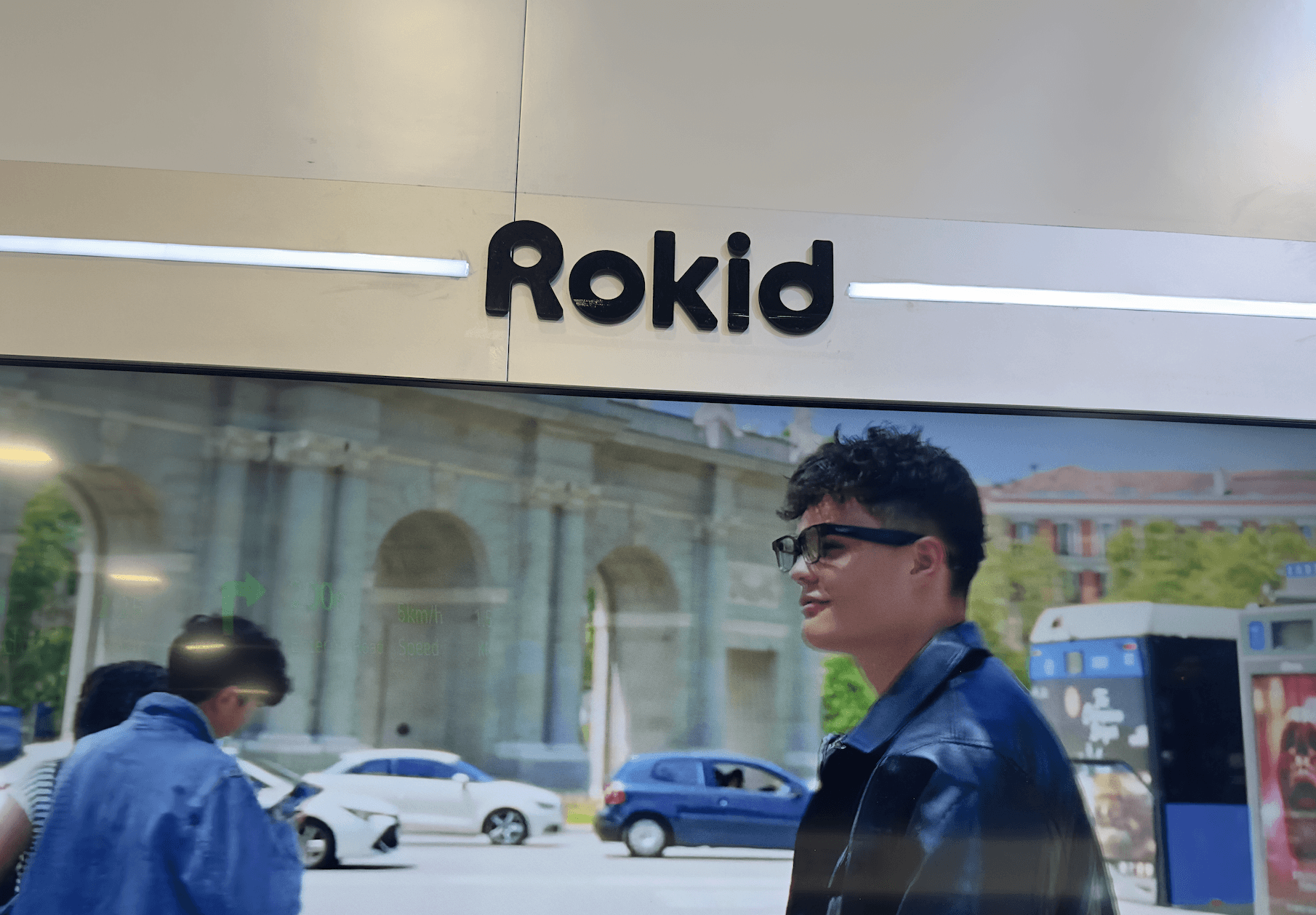
One of the most telling aspects of Rokid’s strategy is how it validated consumer demand. In 2025, the company launched its lightweight AR glasses on Kickstarter. Within 45 days, more than 5,000 backers contributed $3.61 million, setting a record for XR device crowdfunding.
The product itself made its priorities clear: a 49-gram ultra-lightweight design, dual Micro-LED displays, real-time translation, object recognition, live captions, and an open SDK architecture for AI integration.
If Meta’s Ray-Ban smart glasses represent a polished but closed system, Rokid’s approach is fundamentally different. The device was designed from the start as a tool users can extend. Rather than locking into a single AI ecosystem, Rokid supports integration with multiple platforms such as ChatGPT, Google Gemini, and Microsoft’s translation services. This openness is not just a technical decision—it reflects a broader product philosophy.
As Rokid’s leadership put it:
“What users wanted wasn’t more spectacle.
It was intelligence, freedom, and practicality.”
At CES, this did not feel like a marketing slogan. It felt like a design principle embedded throughout the product.
Market Reception and Industry Perspective
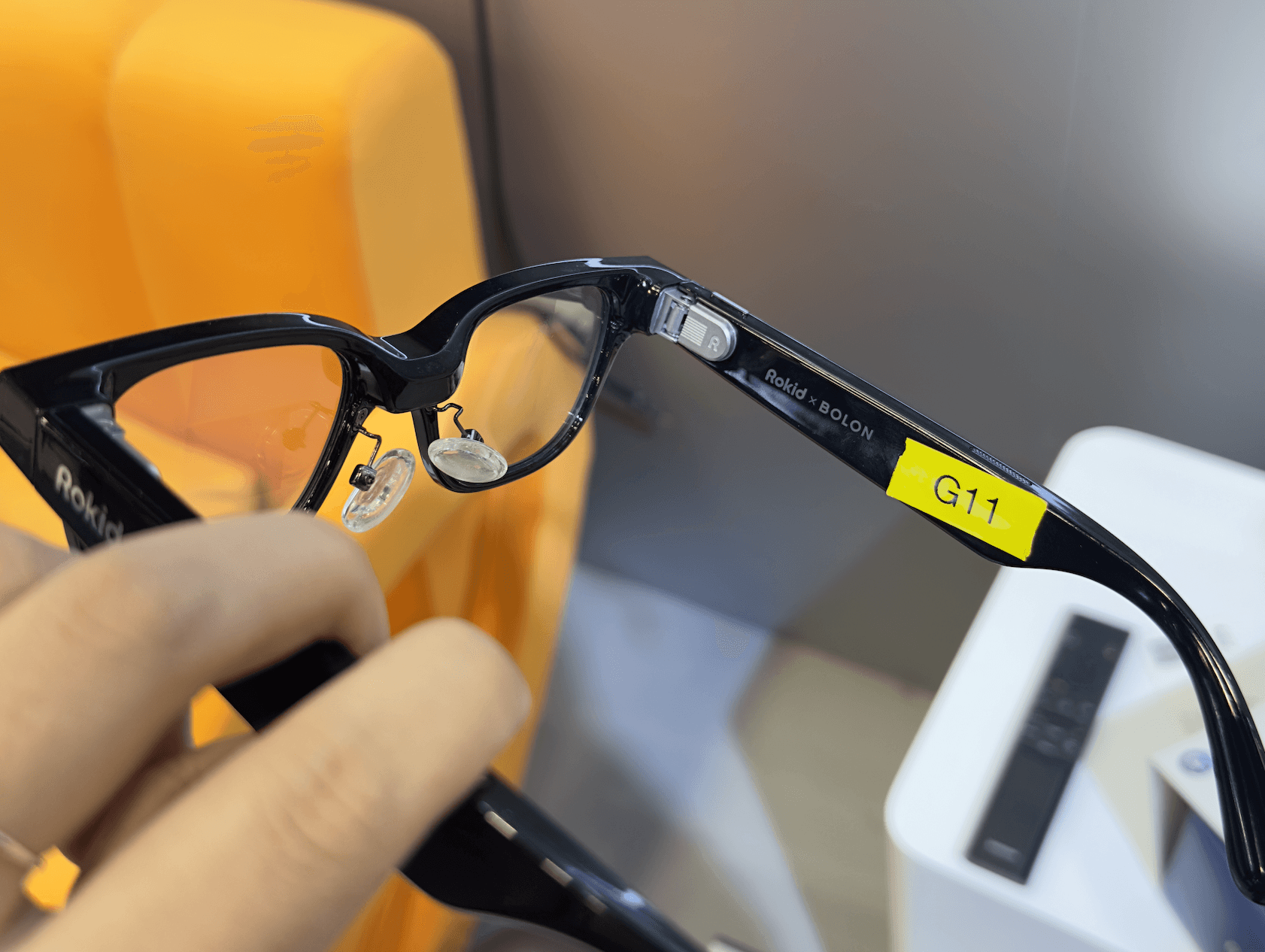
Media response to Rokid has been notably consistent. Outlets such as The Verge have described Rokid as “the most realistic alternative to Meta Ray-Ban smart glasses.”
Reviewers repeatedly point to three factors: lighter form factor, more accessible pricing, and—most importantly—the freedom to choose and evolve AI capabilities over time. At the same time, challenges remain. Competing against established players like Meta and XREAL will require continued expansion of the content ecosystem and a resilient global supply chain.
Even so, industry sentiment appears to be converging on a shared conclusion: the mass adoption of AR glasses will not be driven by technical sophistication alone, but by how seamlessly these devices integrate into everyday life.
Why This Matters for Product and Business Leaders
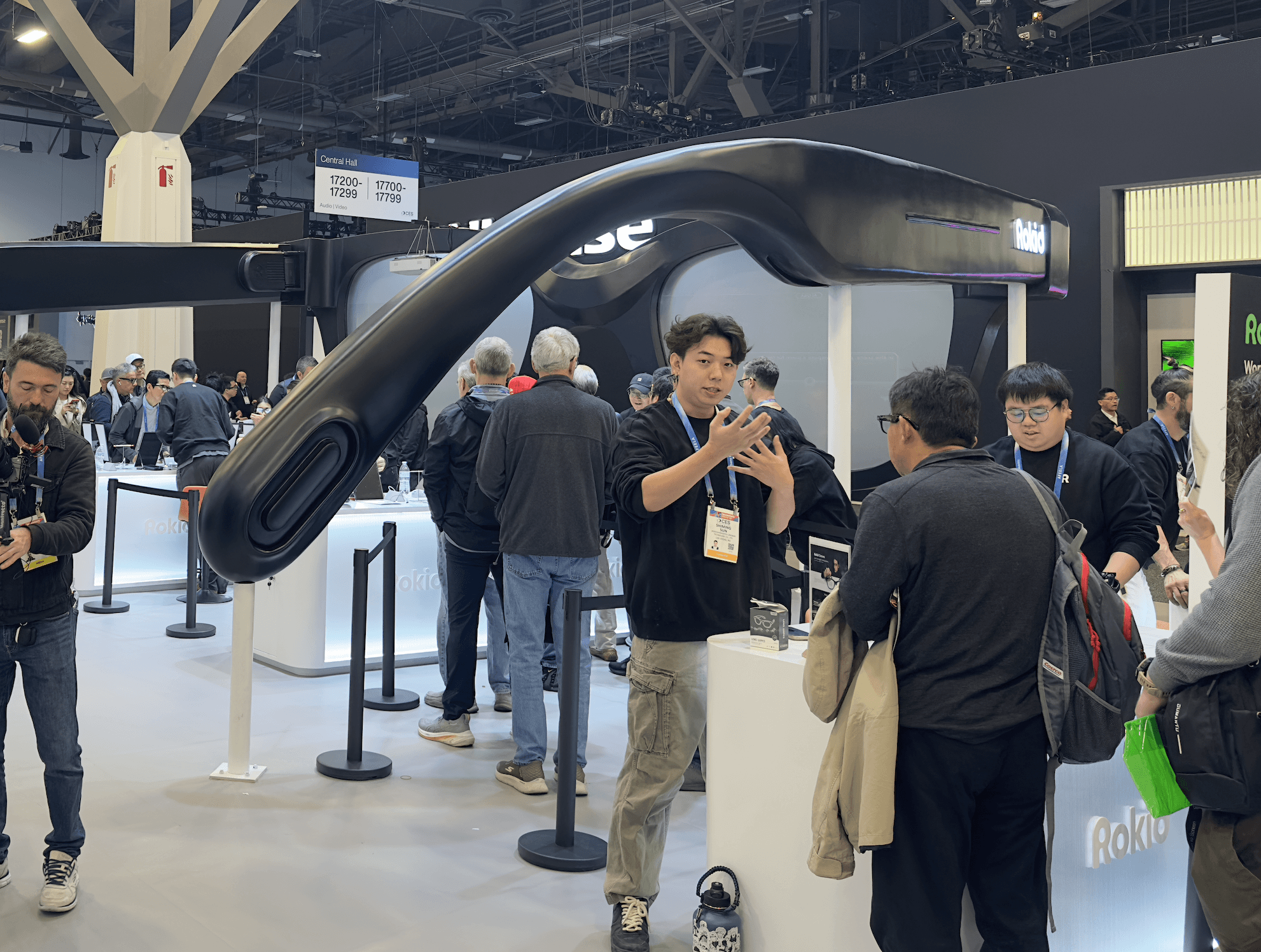
Rokid’s CES presence highlighted a set of principles that extend well beyond AR hardware.
The discipline to subtract
Competitive advantage does not come from shipping every possible feature. Markets respond when a single core experience is executed exceptionally well.Openness over control
A tightly controlled, closed product may feel complete at launch, but extensible systems tend to endure longer and adapt better.Solve today before promising tomorrow
Products users want now often outperform technologies positioned as “future-ready” but disconnected from immediate needs.
These are the same questions many organizations face when designing products, services, and platforms.
Not “Is this impressive?”
But “Is this something people will keep using?”
At CES, Rokid stood out as one of the brands offering a clear, credible answer to that question.
Sphere D.
Contact.
contact@sphered.kr
+82 70-8098-0775
Location.
Seoul, Korea
Toronto, Canada
Services.
Works.
Copyright © 2025 Sphere D. All rights reserved.
Sphere D | CEO: Hyunyoung Kim | Business Registration No.: 330-33-01418
E-commerce Registration No.: 2025-Seoul Seocho-0075
Address: 11F, 17, Seocho-daero 77-gil, Seocho-gu, Seoul, Republic of Korea