[CES 2026] NEURA Robotics - A General Purpose Humanoid Designed to Work Alongside Humans
2026. 1. 13.
CES 2026

Hyunyoung Kim
Founder of Sphere D, a design and strategy studio analyzing global tech trends and product positioning.
This article is part of Sphere D’s CES 2026 Insight Series, where we analyze what is often overlooked: structure, positioning, and why products succeed or fail in the real market.
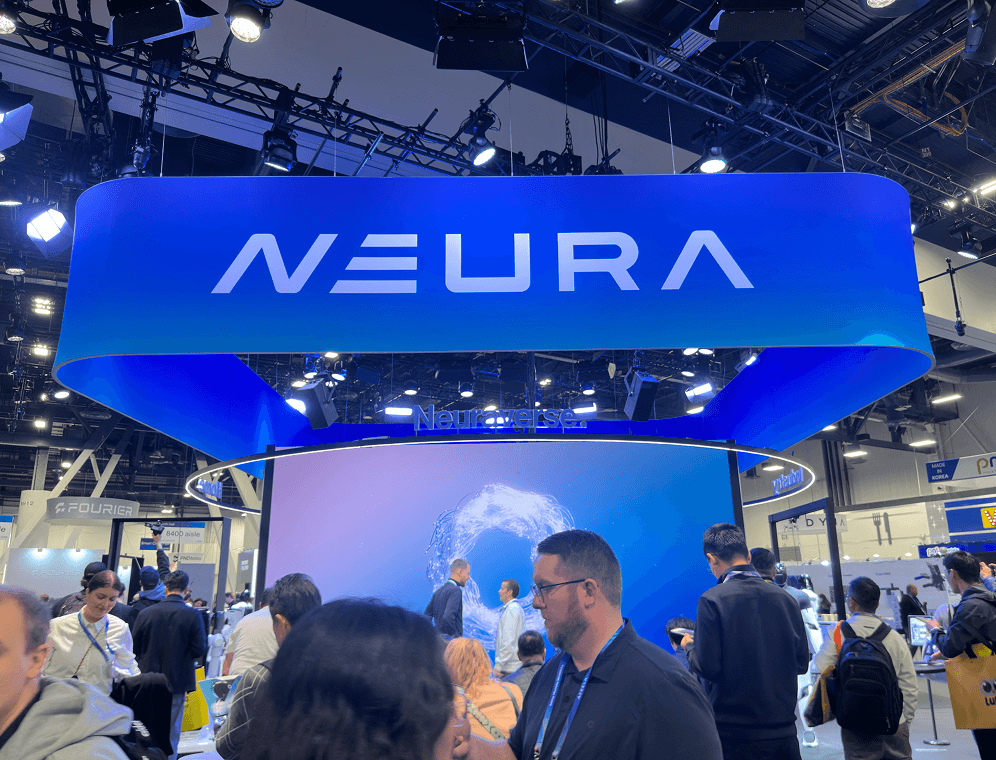
Bridging Factory and Home Through a Single Robot Platform
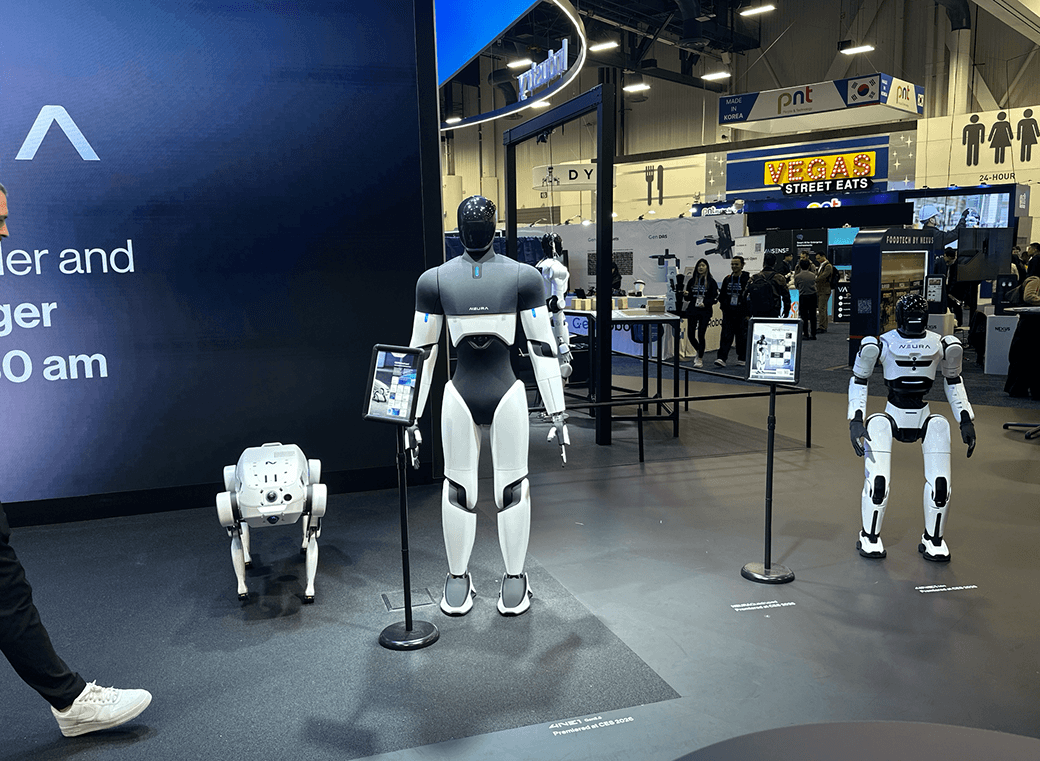
At CES 2026, German robotics startup NEURA Robotics made its ambition unmistakably clear. With its humanoid robot, the company aims to connect two traditionally separate environments, factories and homes, through one shared robotic platform. Designed in collaboration with Porsche Design Studio, the robot’s appearance avoids the intimidating feel of industrial machinery and instead conveys a balanced presence meant to stand naturally beside people.
The demo NEURA staged at CES was intentionally symbolic. The humanoid, called 4NE1, was shown performing assembly tasks on a factory floor, then seamlessly transitioning into a kitchen setting to assist with dishwashing and tidying. It was a deliberate disruption of the long standing division between industrial robots and household robots. NEURA’s core bet is generalization. Not multiple robots optimized for narrow tasks, but a single platform capable of operating across human living and working spaces. It is neither the easiest technical path nor the safest business decision, but the direction is unambiguous.
A Networked View of Robotics Intelligence
At the center of this approach is NEURA’s proprietary Neuraverse OS. Rather than treating each robot as an isolated intelligence, the system connects them as part of a shared learning network. When one robot learns how to grasp a new object, that knowledge is uploaded to the cloud and distributed to other robots in different locations. Skill acquisition is no longer individual, it becomes collective. NEURA positions robots not as standalone products, but as nodes within an evolving intelligence network.
The hardware reinforces this vision. The 4NE1 Gen3 stands roughly 170 centimeters tall and weighs between 60 and 70 kilograms, with high torque motorized joints capable of lifting up to 100 kilograms. Both arms are equipped with patented artificial skin sensors that detect proximity before contact, allowing the robot to modulate its motion to avoid collisions with people or objects. Built on NVIDIA’s next generation robotics stack, based on the Isaac GR00T framework, the system integrates vision, speech, and tactile perception into unified reasoning. At CES, 4NE1 engaged in simple conversations with attendees and demonstrated tasks like retrieving cups from a coffee machine and pouring drinks, signaling not conceptual potential, but practical readiness.
Founded in 2019, NEURA Robotics is still a relatively young company, yet it has already proven its capabilities in European industrial environments through collaborative robots such as MAiRA. The 4NE1 Gen3 represents a culmination of that technical groundwork. Challenges remain, including pricing, software maturity, and the regulatory certifications required for close human robot interaction. Even so, Interesting Engineering described CES 2026 as a turning point where humanoids appeared with real customers, defined roles, and production timelines, citing 4NE1 as a leading example.
Why This Story Matters
What makes NEURA compelling is not the humanoid form itself, but the clarity of intent behind it. Rather than treating humanoids as future curiosities, the company began by deciding where the robot would work and with whom. By refusing to separate factory and home, and instead defining all human occupied spaces as the robot’s operating context, NEURA made a bold strategic choice.
This mirrors a question many organizations face when shaping products and platforms. Should we add more features, or should we rethink the context in which the product is meant to live. At CES 2026, NEURA’s 4NE1 quietly demonstrated how difficult, and how powerful, the second choice can be.
Sphere D.
Contact.
contact@sphered.kr
+82 70-8098-0775
Location.
Seoul, Korea
Toronto, Canada
Services.
Works.
Copyright © 2025 Sphere D. All rights reserved.
Sphere D | CEO: Hyunyoung Kim | Business Registration No.: 330-33-01418
E-commerce Registration No.: 2025-Seoul Seocho-0075
Address: 11F, 17, Seocho-daero 77-gil, Seocho-gu, Seoul, Republic of Korea