[CES 2026] LG Electronics - Building a “Zero Labor” Smart Home with Robots and AI Appliances
2026. 1. 13.
CES 2026

Hyunyoung Kim
Founder of Sphere D, a design and strategy studio analyzing global tech trends and product positioning.
This article is part of Sphere D’s CES 2026 Insight Series, where we analyze what is often overlooked: structure, positioning, and why products succeed or fail in the real market.
The Most Practical Vision of a Home Without Chores
At CES 2026, LG Electronics delivered a clear and consistent message: the future of the home is not just smarter appliances, but a home where people are fundamentally freed from household labor. LG calls this vision the Zero Labor Home, and few companies illustrated it as concretely.
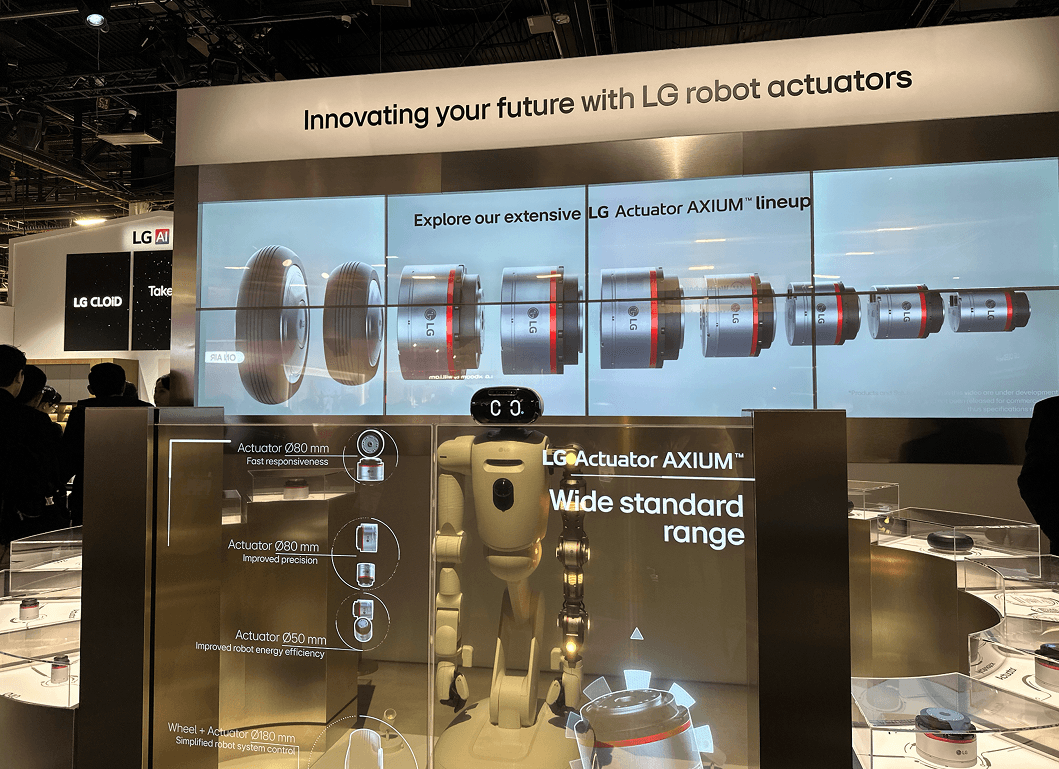
The most striking embodiment of this vision was the unveiling of LG’s Smart Home Robot AI Agent. Integrated with the LG ThinQ platform, this autonomous AI robot operates as a mobile smart home hub, navigating the house, monitoring the environment, and actively controlling connected appliances.
Built on a wheeled base with an upper body and articulated arms, the robot moves throughout the home, collecting temperature and humidity data and making contextual decisions, turning air conditioners or air purifiers on and off as needed. Equipped with cameras, microphones, and natural language processing, it interacts with users through voice, facial expressions, and gestures, positioning itself not merely as a tool, but as an emotionally responsive home companion.
Adding a New “Caretaker” to the Home
LG frames this robot not as another device, but as an additional presence responsible for managing the home. When residents are away, the robot patrols the house, monitors pets via its camera, and sends alerts if it detects unusual activity. Users can also remotely view their home from the robot’s perspective.
Multimodal AI enables the robot to understand context and user intent, while energy efficiency is built directly into its role. In scenarios where no one is home, the robot can coordinate with smart outlets to cut unnecessary power consumption—positioning energy management as a default behavior rather than an optional feature.
As Ryu Jae-cheol, President of LG’s Home Appliance & Air Solution Company, stated, “Our goal is to free customers from household labor so they can enjoy a smarter and more enjoyable life.” The message was clear: this robot is not a side experiment, but a core pillar of LG’s smart home strategy.
From “Showing Features” to “Managing Life”
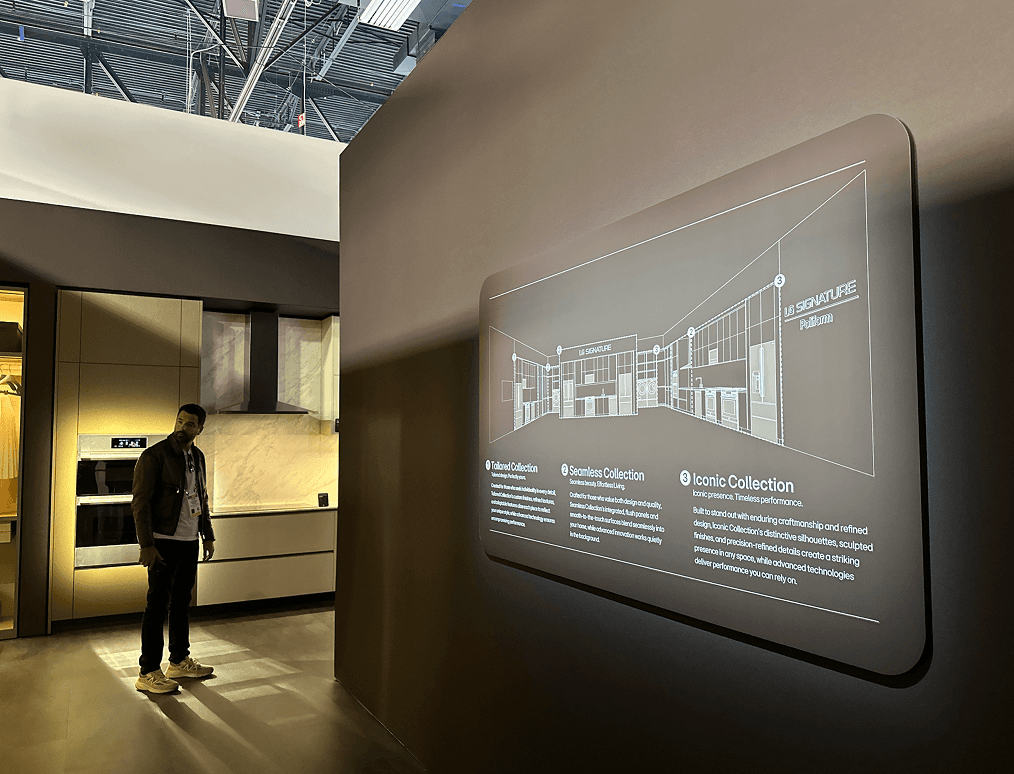
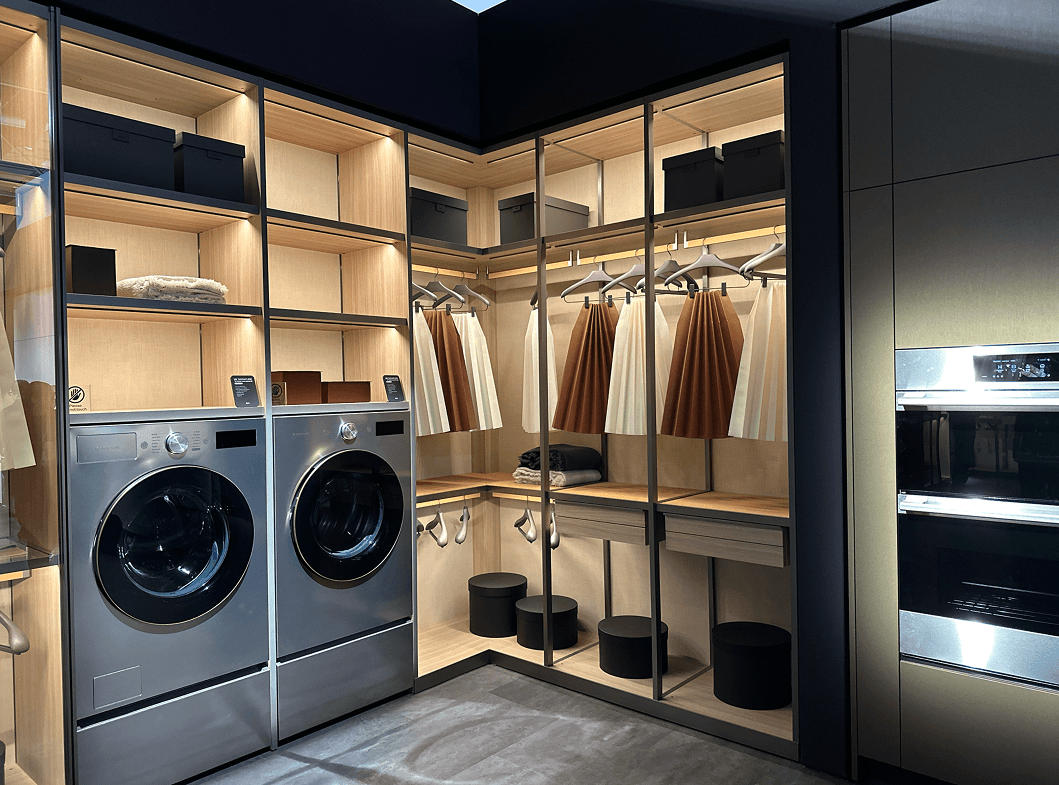
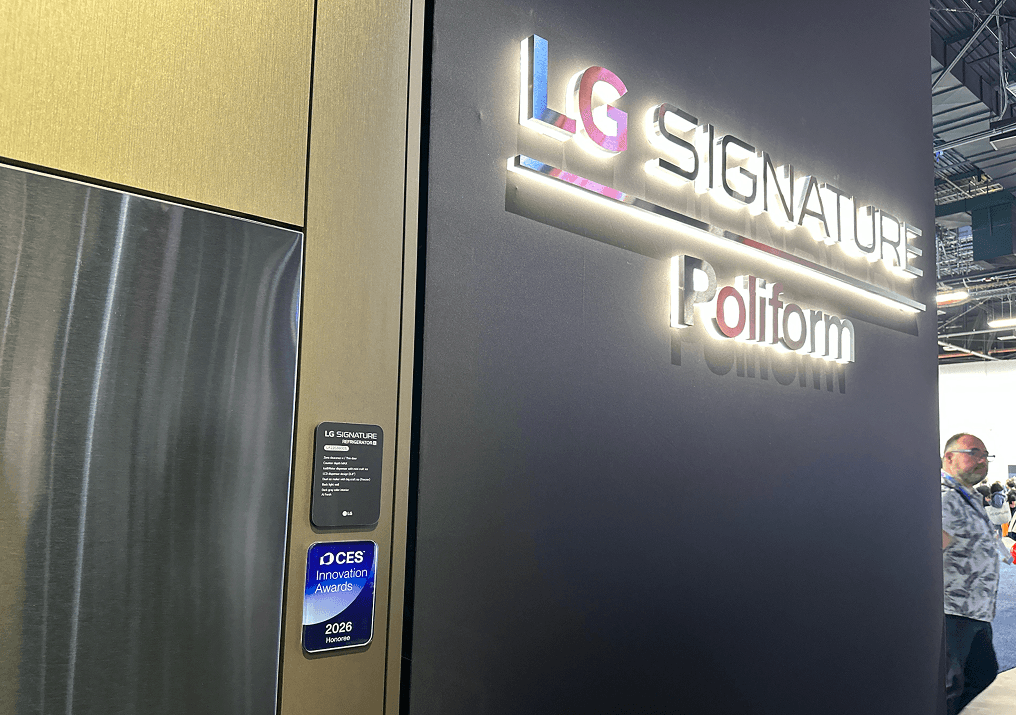
LG’s broader appliance portfolio reflects the same shift. Across CES 2024 and 2025, the second generation of LG SIGNATURE appliances demonstrated how AI is redefining the role of home devices, from passive tools to active managers.
Take the LG SIGNATURE French Door Refrigerator. A transparent OLED touch display embedded in the door allows users to check contents without opening it, adjust settings, or even view media. More importantly, the ThinQ Food Management system uses an internal AI camera to automatically identify stored ingredients, track expiration dates, and recommend recipes, addressing not only convenience, but food waste and planning.
LG’s AI Oven follows a similar philosophy. With three internal cameras, it monitors cooking in real time, records timelapse videos, and uses Gourmet AI to recognize ingredients and recommend optimal cooking modes. Across LG’s appliance lineup, sensors and AI reduce the need for user intervention, while the ThinQ platform unifies control through voice commands and mobile apps. This is why LG refers to these products as “AI Appliances”, they are designed to make decisions, not just execute commands.
How Far Can the Convergence of Robots and Appliances Go?
LG’s strategic direction is unambiguous: lead the next phase of smart homes through the convergence of robotics and appliances. Media outlets such as IoT World Today have noted that LG has moved home robots beyond conceptual demos into practical, everyday helpers.
This trajectory became even clearer at CES 2026 with the introduction of CLOiD, LG’s advanced dual-arm household robot. In live demonstrations, CLOiD folded laundry, loaded dishwashers, and assisted with cooking tasks in a realistic kitchen environment. Built on a wheeled base with an adjustable torso and five-fingered robotic hands, CLOiD leverages LG’s Affectionate Intelligence philosophy and a Vision–Language–Action integrated AI model—enabling it to understand context, interpret commands, and act autonomously.
Skepticism remains, particularly around cost, durability, and timelines for mass adoption. Many of these robots are still prototypes. However, considering LG’s decades of appliance expertise, deep understanding of household behavior, and sustained investment in robotics and partnerships, the idea of a robot-integrated LG smart home no longer feels distant.
Why We’re Sharing This with Our Clients
LG’s CES narrative wasn’t about adding more AI for the sake of innovation. It was about redefining the home as a living system, one that is continuously managed, optimized, and evolved.
In this system, robots become the orchestrators, while appliances increasingly take responsibility for decisions users once had to make themselves. This directly mirrors a question we frequently face with our clients:
Should a product ask users to do more, or should it quietly remove the need to act at all?
At CES 2026, LG was one of the few companies that answered that question with clarity and consistency. The Zero Labor Home is not about spectacle. It’s about designing experiences where effort gradually disappears, and life simply runs better in the background.
Sphere D.
Contact.
contact@sphered.kr
+82 70-8098-0775
Location.
Seoul, Korea
Toronto, Canada
Services.
Works.
Copyright © 2025 Sphere D. All rights reserved.
Sphere D | CEO: Hyunyoung Kim | Business Registration No.: 330-33-01418
E-commerce Registration No.: 2025-Seoul Seocho-0075
Address: 11F, 17, Seocho-daero 77-gil, Seocho-gu, Seoul, Republic of Korea