[CES 2026] Dyna Robotics - Turning the “Impossible” Task of Folding Laundry into Reality
2026. 1. 13.
CES 2026

Hyunyoung Kim
Founder of Sphere D, a design and strategy studio analyzing global tech trends and product positioning.
This article is part of Sphere D’s CES 2026 Insight Series, where we analyze what is often overlooked: structure, positioning, and why products succeed or fail in the real market.
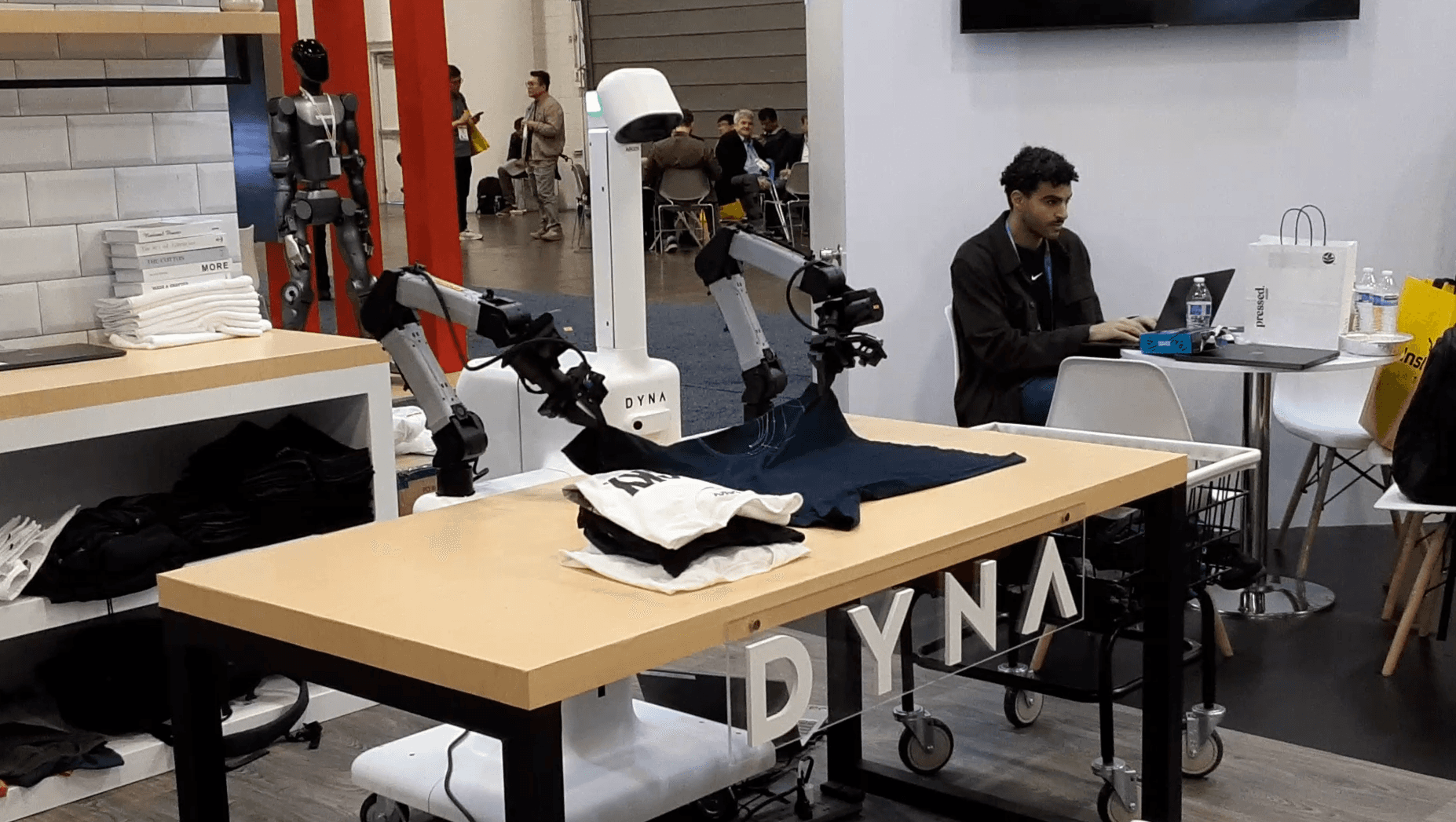
Crossing a Line Robotics Was Not Supposed to Cross
In robotics, folding laundry has long been considered a forbidden task. Fabric has no fixed shape, behaves differently every time, and responds dramatically to even slight changes in force. For years, the idea that robots could fold clothes like humans was widely dismissed as impractical, if not impossible. Dyna Robotics drew attention at CES 2026 precisely because it challenged that assumption head on.
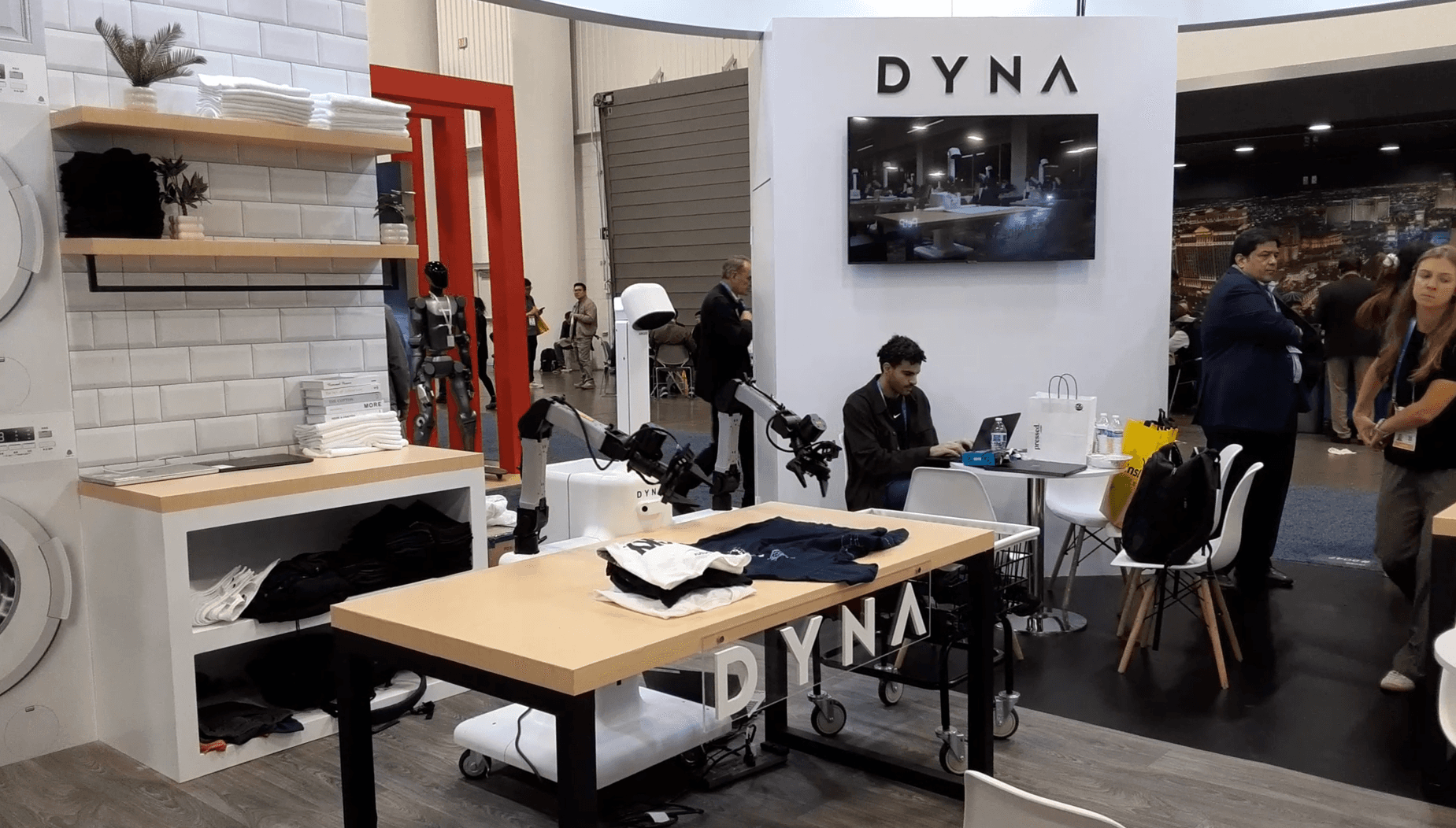
A Scene That Felt Less Like a Demo and More Like an Operation
At the Dyna booth, two robotic arms worked continuously. One arm lifted a shirt, while the other supported and spread the fabric from the opposite side. Moments later, the arms moved in coordination, folding sleeves, halving the garment, and stacking it neatly. Nearby, another robot collected the folded clothes and arranged them in orderly piles. The process was not slow, and failures were rare. It felt less like a proof of concept and more like watching an existing production line in motion.
That impression mattered, because these robots were not exhibition prototypes. Dyna engineers explained that the system is already deployed in real environments, operating up to sixteen hours a day at hotels, gyms, and commercial laundry facilities. One notable example is Monster Laundry in Sacramento, which introduced Dyna’s shirt folding robots in late 2025 and now positions itself as North America’s first robotic laundromat. The key differentiator is clear, this technology moved from the lab to the field first.
How Dyna Approached the “Impossible”
Behind this capability is a highly focused technical approach. Dyna’s robots combine high performance 3D cameras with advanced AI vision algorithms to recognize garments of varying sizes, materials, and conditions in real time. The system analyzes not only outlines, but also wrinkles and fabric deformation, determining the optimal folding sequence on the fly. This capability is central to Dyna’s advanced manipulation model, which predicts how thin textiles will behave as they are handled.
Equally important is the synchronized control of two robotic arms. While one arm spreads the fabric, the other grasps edges at precisely the right moment. This level of coordination represents a concentration of high difficulty robotics techniques rather than a single breakthrough component.
The investment community responded accordingly. In September 2025, Dyna Robotics raised 120 million dollars in Series A funding from a group that included Nvidia’s NVentures, Amazon, LG Electronics, Salesforce, and Samsung Electronics. For a robotics startup, this lineup of strategic investors is notable, reflecting confidence that Dyna’s technology has the potential to reshape industrial workflows rather than simply automate a narrow task.
Industry observers echoed this sentiment. A robotics analyst familiar with years of laundry folding demonstrations remarked that most previous attempts had been little more than illusions, calling Dyna’s system the most credible he had seen. TechCrunch also named Dyna one of the most memorable robots of CES 2026, noting that it addressed one of robotics’ longest standing challenges.
What Comes Next
The next question is how quickly this capability will spread. Dyna is already expanding beyond shirts into towels, packaging of folded garments, and automated laundry sorting. While the company acknowledges that home use remains a longer term possibility, its current focus is firmly on industrial deployment. Cost, safety, and spatial constraints remain real challenges, but one conclusion is already clear.
The definition of what robots cannot do is being rewritten. What Dyna Robotics showed at CES 2026 was not just a robot folding laundry, but a signal of how far robotics has moved from theory into everyday industrial reality.
Sphere D.
Contact.
contact@sphered.kr
+82 70-8098-0775
Location.
Seoul, Korea
Toronto, Canada
Services.
Works.
Copyright © 2025 Sphere D. All rights reserved.
Sphere D | CEO: Hyunyoung Kim | Business Registration No.: 330-33-01418
E-commerce Registration No.: 2025-Seoul Seocho-0075
Address: 11F, 17, Seocho-daero 77-gil, Seocho-gu, Seoul, Republic of Korea