A Semantic Color System for Collaboration (For Designers and Developers)
2024. 11. 30.
Figma

Hyunyoung Kim
Founder of Sphere D, a design and strategy studio analyzing global tech trends and product positioning.
A semantic color system assigns meaning-based names to colors, enabling UI/UX designers and developers to manage color decisions with clarity and consistency throughout collaboration.
For designers, it strengthens decision-making, preserves visual hierarchy, and ensures design intent remains clear across screens.
For developers, it makes color usage intuitive, improves code readability, and supports efficient reuse.When semantic colors are defined in Figma and applied through Zeplin, color-related workflows become significantly more streamlined—allowing both designers and developers to work faster, align more easily, and scale the product with confidence.
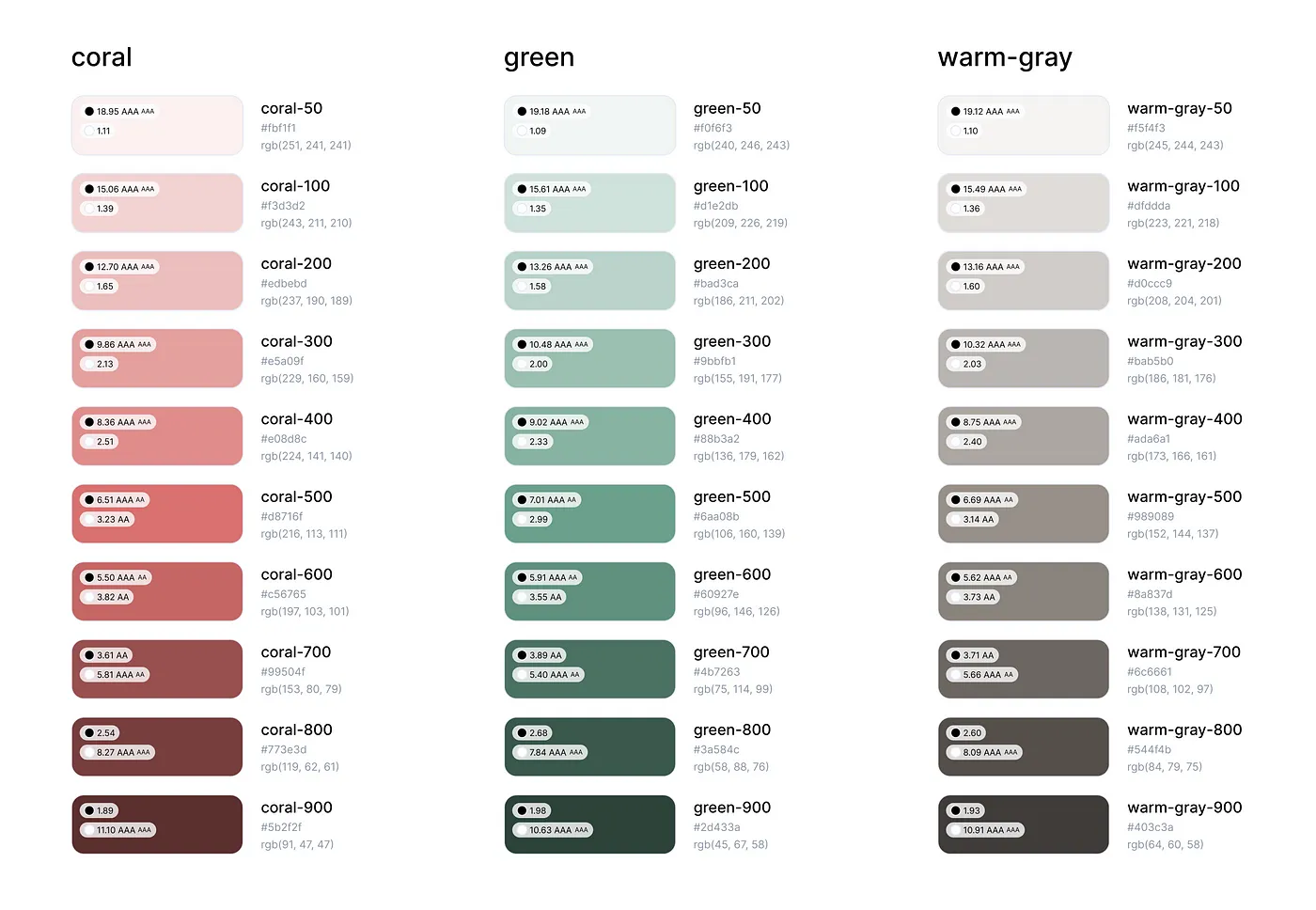
To ensure smooth collaboration between UI/UX designers and frontend developers, adopting a Semantic Color System is highly recommended. A semantic color system assigns names to colors based on meaning and purpose, rather than appearance. This approach reduces guesswork in color decisions and enables teams to manage color systems in a more structured and consistent way.
What Is a Semantic Color System?
A semantic color system is an essential collaboration tool for both UI/UX designers and frontend developers. It defines colors using names that describe their role in the interface—such as primary, secondary, or accent—rather than their visual characteristics.
By assigning meaning-based names, colors can represent functions like base colors, supporting colors, or emphasis states. This reduces subjective interpretation in color design and allows teams to manage colors systematically and predictably.
Semantic colors can be defined for various purposes, but they must follow clear and consistent rules. Establishing a unified naming convention is critical. Colors should be managed at an object or role level, and naming should be explicit and predictable. A typical structure begins with defining primary colors, followed by secondary colors, and finally accent or emphasis colors—making the system scalable and easy to understand.
Benefits for UI/UX Designers
For UI/UX designers, a semantic color system provides a clear rationale behind color choices.
It helps maintain visual hierarchy and consistency across interfaces, making design decisions more intentional and defensible.
With semantic colors, designers can manage UI elements more efficiently and maintain the system over time without rethinking color usage on every screen. This results in better long-term maintainability and a more cohesive user experience.
Benefits for Frontend Developers
Frontend developers benefit from reduced ambiguity in color usage.
Because semantic color names clearly express intent, developers can immediately understand how and where each color should be applied.
Design-defined semantic colors can be reused directly in code, improving consistency and reinforcing a system-driven approach. To use semantic colors effectively, developers need to understand the underlying structure and logic of the system—making collaboration smoother and implementation more reliable.
Building Semantic Colors in Figma
UI/UX designers can build semantic color systems directly in Figma.
By assigning meaningful names to color styles within components, designers can clearly communicate color intent and reuse those styles consistently throughout the design system.
Using Semantic Colors in Zeplin
Frontend developers can take full advantage of semantic colors through Zeplin.
Zeplin automatically generates color codes and provides them in a format similar to CSS variables, making it easy to integrate semantic colors directly into development workflows.
By using a semantic color system, designers and developers can focus on their respective roles while collaborating more efficiently. The result is a shared visual language that reduces friction, improves consistency, and makes color-related work faster, clearer, and more scalable.
Sphere D.
Contact.
contact@sphered.kr
+82 70-8098-0775
Location.
Seoul, Korea
Toronto, Canada
Services.
Works.
Copyright © 2025 Sphere D. All rights reserved.
Sphere D | CEO: Hyunyoung Kim | Business Registration No.: 330-33-01418
E-commerce Registration No.: 2025-Seoul Seocho-0075
Address: 11F, 17, Seocho-daero 77-gil, Seocho-gu, Seoul, Republic of Korea